
The UK Budget: Reeves’ mild medicine
A Budget described as benign is rarely headline-grabbing. No sweeping tax cuts, no sharp spending pivots, no surprises. Yet in the gilt market which is arguably the most…

In recent months, investors have been so fixated on the uncertain trajectories of AI valuations and “AI winners vs losers” narratives that we’re watching a classic misallocation of capital in real time. There’s an almost myopic tone in markets about generative models and software moats at a time when systemic risks like supply chains, logistics corridors and chokepoints in the physical economy are being materially repriced by geopolitical stress.
It’s striking, but not surprising: AI narratives live in a realm of abstraction whereas the real world still turns on the movement of physical goods through physical bottlenecks. That difference matters because the real economy still has bottlenecks that, if further disrupted, reverberate globally. None is more immutable today than the Strait of Hormuz, the narrow maritime corridor that accounts for nearly a fifth of global oil shipments and a disproportionate share of liquefied natural gas and bulk cargo flows. Its importance is not theoretical but structural. Any credible threat to its functioning instantly reprices energy markets, shipping rates, insurance premiums, and inflation expectations across interconnected supply networks.
Today’s escalation in U.S.–Iran tensions is a structural test. Market data shows oil benchmarks spiking, futures markets wrestling with a geopolitical risk premium, and investors stepping back from risk assets at the same time as AI “sell-offs” appear in tech indices. Perhaps this is all symptomatic of where the real fragilities in global capitalism lie. Software hype cycles can reverse without altering geopolitical energy flows but real disruption in Hormuz or the wider Middle East could be far more consequential to corporate earnings and consumer price levels than the latest OpenAI pricing model forecast ever will be.
AI will transform sectors over the long run, but that revolution is layered on top of supply chains that remain brittle and vulnerable to geopolitical strain. From Suez to Russia-Ukraine to COVID supply dislocations, markets have repeatedly underestimated the non-linear impacts of supply-chain shocks on inflation, trade, and growth. Today, the added dimension of a potential U.S.–Iran confrontation brings those vulnerabilities into sharp relief again. The very fact that oil, gold, and safe-haven assets are rallying alongside selling in tech suggests markets are repricing macro disruption risk rather than purely “AI risk.”
From an investment perspective, this is a timely reminder that real economy exposures matter: port operations, freight logistics, container capacity, shipping index derivatives, energy infrastructure, and supply-chain software platforms enabling resilience have real earnings and real pricing power when uncertainty spikes. Artefacts of AI valuations may outperform on narrative alone in the short term, but when real places like Hormuz are threatened, flows stop, insurers widen spreads, and the cost of capital rises.
The prudence of capital allocation should account for the interaction between digital evolution and physical scarcity. Supply chains are undergoing digitisation, but they remain governed by geography, geopolitics, and sovereign behaviour. In that sense, logistics and supply infrastructure are not just investments, they’re hedges against the very risks that current headline narrative cycles fail to price adequately.
25th February 2026

In recent months, investors have been so fixated on the uncertain trajectories of AI valuations and “AI winners vs losers” narratives that we’re watching a classic misall…
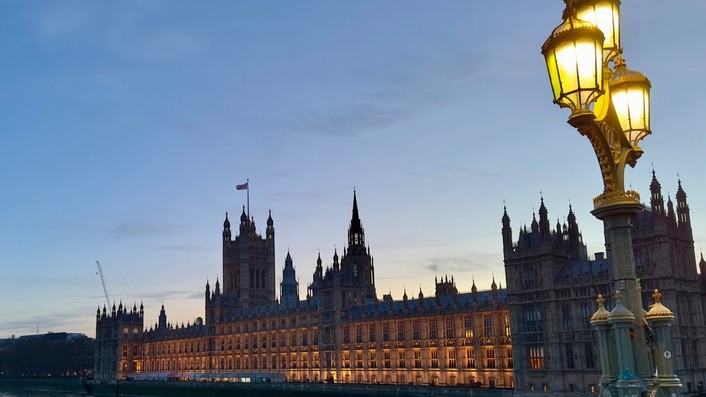
A Budget described as benign is rarely headline-grabbing. No sweeping tax cuts, no sharp spending pivots, no surprises. Yet in the gilt market which is arguably the most…