
Insuring against dependency
For much of the US / Iran conflict, investors have understandably watched two things like hawks: equity markets and the oil price. Both offer an immediate reading of how…

Financial markets dislike very few things more than uncertainty. Indeed, they probably have a greater tolerance for the hip hop reference in this article heading than they have appetite for the ‘known and unknown unknowns’ of financial investment. They can usually accommodate the prospect of higher taxes, tighter regulation and even significant political change, provided the rules of the game are clear. What they struggle with is ambiguity. It is that question, rather than ideology alone, that increasingly surrounds Andy Burnham.
Burnham’s political career has never been built around financial markets. Unlike some of his contemporaries, he has not cultivated particularly close relationships with the City, private equity or institutional investors. His reputation has instead been forged through public service, regional government and his advocacy for greater devolution, particularly during his tenure as Mayor of Greater Manchester. That inevitably creates questions for investors. Not necessarily because markets assume he is hostile to business, but because they have relatively little evidence on which to judge how he would behave when confronted with difficult economic choices.
The challenge is that much of Burnham’s political identity has been constructed outside Westminster. His focus has been transport, housing, local investment and regional economic renewal rather than the mechanics of sovereign debt markets, pension fund confidence or international capital flows and for wealth managers and investors, that matters. Markets tend not to react to political personalities as much as they react to fiscal credibility and the experience of recent British governments has reinforced just how quickly gilt markets can impose discipline on any administration perceived to be taking excessive risks.
Burnham appears well aware of this reality. Recent speeches have deliberately emphasised adherence to existing fiscal rules, balanced public finances and the importance of maintaining market confidence. Indeed, his latest economic interventions suggest someone who recognises that governments today govern alongside financial markets rather than independently of them. This is an important signal because it suggests that while Burnham may favour a more interventionist state, greater regional investment and a different model of economic growth, he also understands that credibility cannot simply be declared. It has to be earned.
Of course, none of that removes uncertainty, many of the policies associated with Burnham remain deliberately broad. Greater devolution expanded infrastructure investment, more council house building and renewed industrial strategy are all relatively easy to support in principle. He has vision, which is very welcome among Labour MPs, but the more difficult questions concern funding, taxation and implementation remain. Will higher public investment be financed through borrowing, taxation or spending restraint elsewhere? Would capital gains taxation move closer to income tax? Could property taxation change? Would wealth taxes reappear as part of the political debate?
These questions remain at the time of writing open to conjecture rather than settled policy. Some economists sympathetic to Burnham have cautioned against relying on wealth taxes as a significant source of revenue, arguing they can prove economically inefficient while encouraging changes in investor behaviour.
This is an important distinction because financial markets are perfectly capable of adapting to higher taxation when it is predictable and accompanied by credible long term fiscal management. What unsettles markets is uncertainty over the direction of travel. For wealth managers, the objective should not be to predict political outcomes but to prepare portfolios capable of coping with multiple scenarios. Diversification across jurisdictions, careful use of tax allowances, maintaining liquidity where appropriate and regularly reviewing estate planning remain sensible disciplines regardless of who occupies Downing Street. Political cycles change far more frequently than long term investment objectives.
Perhaps the most conclusion for now is that Andy Burnham remains less an ideological risk than an informational one. Markets simply know less about him than they do about many previous prime ministers. That information gap naturally creates a degree of caution and over time that caution may fade if policy becomes clearer and fiscal discipline remains credible. Equally, if future announcements raise doubts over borrowing, taxation or government intervention, markets are unlikely to wait long before expressing their opinion.
For now, Burnham remains something of an unknown quantity. Not because investors expect the worst, but because they are still waiting to discover precisely which Andy Burnham would arrive in government. When will the real Andy Burnham stand up?
2nd July 2026
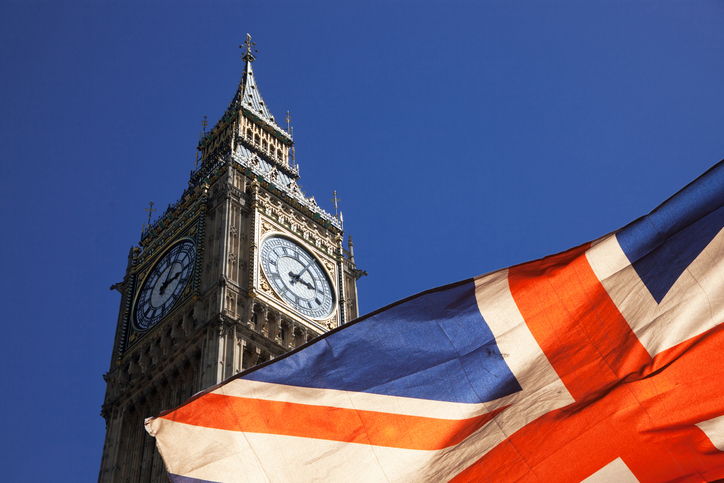
Britain is not a very shouty place. Indeed, Andy Burnham is not a very shouty man. But the aspirations he laid out in his speech could change the mood music and, importan…
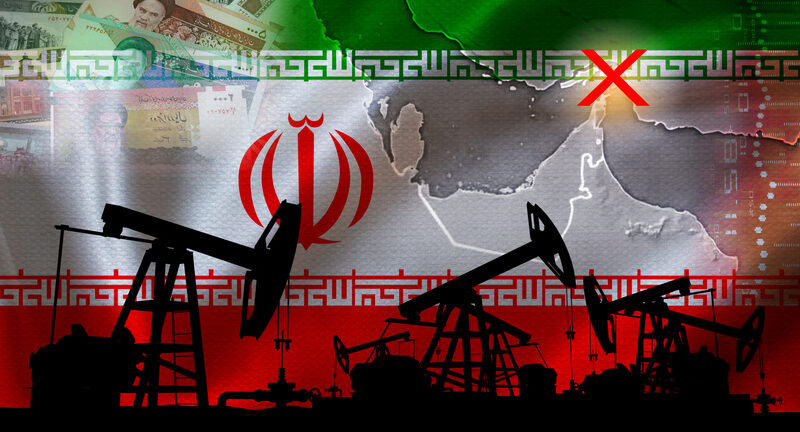
For much of the US / Iran conflict, investors have understandably watched two things like hawks: equity markets and the oil price. Both offer an immediate reading of how…